A First Volunteer Morning, Planned Around a Clear Finish
Plan a first volunteer morning around a clear role, useful orientation, and a welcoming handoff so newcomers understand how the group works before they join.

The most common mistake in a first volunteer morning is treating the welcome as an afterthought. A newcomer can arrive willing to help and still leave unsure who makes decisions, how the group communicates, or how to take part next time. A thoughtful orientation turns that first visit into an introduction to the people and practices behind a neighborhood project.
For this article, imagine a courtyard group preparing for a spring gathering. Its organizer wants a newcomer to understand how residents share decisions and stay in touch, not simply to complete a chore. The morning can introduce the group’s purpose, its familiar routines, and the choices a newcomer has about future involvement.
A first volunteer morning should introduce the group, not recruit by pressure
Before the event, the organizer can explain what the group does and how the courtyard fits into neighborhood life. That might include who uses the space, how residents raise concerns, and where notices about gatherings appear. The point is to give context without implying that attendance creates an obligation.
A useful invitation states that the morning is open to newcomers and describes what they can expect to learn. It can name the organizer, identify the gathering place, and say that participants may listen, ask questions, or join a discussion. If there is also practical work, describe it plainly, but keep the invitation focused on the event’s purpose rather than implying that the newcomer will become responsible for the project.
Make room for different ways of taking part. Someone may prefer to observe before speaking, ask a question privately, or leave without signing up for anything further. That choice is part of a genuine welcome, not a test of commitment.
The welcome explains who decides and how residents can contribute
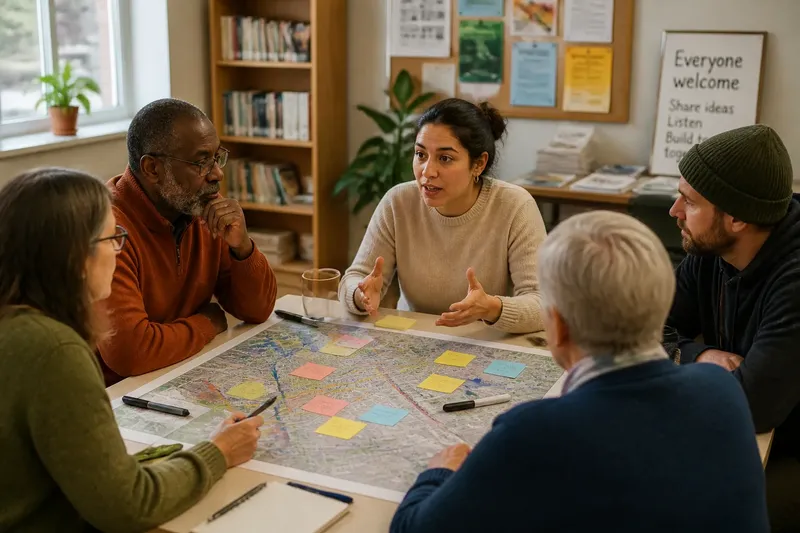
At the start, the organizer can introduce the people present and briefly explain their roles. For example, one resident might coordinate access to the courtyard, while another shares meeting notices. Naming responsibilities helps a newcomer see whom to approach without suggesting that every decision rests with one person.
Explain how the group handles ideas and disagreements in everyday terms. The organizer might say that residents can raise suggestions at an open meeting or send them to a named contact, and that the group discusses changes before acting. Where a decision belongs to a property manager, local authority, or another responsible body, say so clearly rather than implying that volunteers can authorize it themselves.
Imagine a newcomer asks whether the group can add a planter beside the courtyard entrance. The organizer explains that residents can discuss the idea, but must first check the space rules with the property manager. The newcomer learns both how to contribute an idea and where the group’s authority ends.
That distinction is like a labeled key ring: each key has a known purpose, so nobody has to guess which one opens which door. Clear roles and decision routes make it easier for a newcomer to participate without carrying responsibility for choices they cannot make.
Shared routines make a neighborhood group easier to understand
Groups often rely on small habits that are obvious to regulars but unfamiliar to newcomers. Explain where meeting notices are posted, how updates are shared, and how someone can ask a question between gatherings. If the group uses a bulletin board, email list, or messaging channel, state what each one is for and whether joining it is optional.
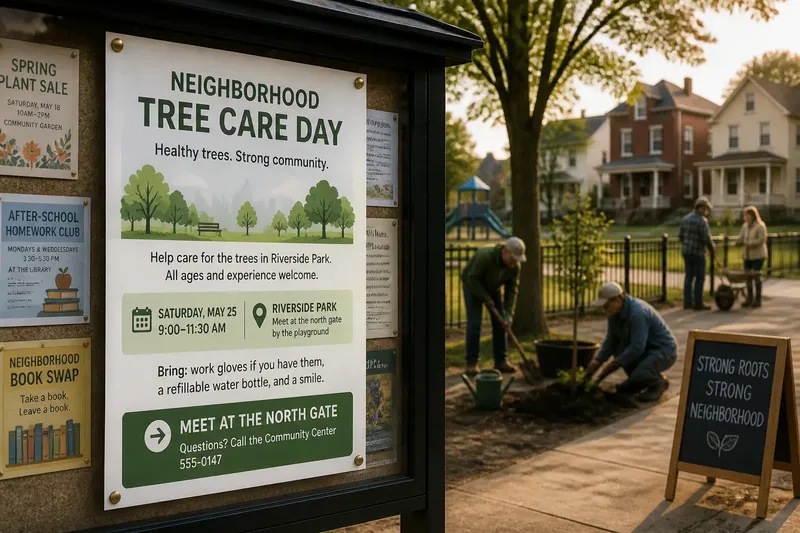
Show how to find the information rather than assuming the newcomer already knows. The organizer might point out the courtyard noticeboard and explain that meeting dates and contact details are posted there. If online notices are used, offer the address or joining instructions without asking someone to share personal details publicly.
It also helps to describe what happens after someone raises a concern. The group can explain who receives it, how it gets discussed, and how the person can hear back. Avoid promising a particular outcome when the group has not made a decision or lacks authority to act.
A first volunteer morning can offer several ways to take part
Participation does not have to mean joining a committee or attending every gathering. A newcomer may want to hear about upcoming events, share an idea, help with one occasion, or simply learn how the group works. Present these as genuine options, and make it easy to decline or decide later.
- Listen first: If the newcomer prefers to observe, then offer a place to sit and explain when discussion begins; if they would rather leave early, let them go without seeking a reason.
- Ask a question: If they have a question about the courtyard, then name the person who can answer it; if that person is unavailable, explain how to pass the question along.
- Share an idea: If they suggest a change, then explain how the group considers proposals; if another organization must approve it, identify that next contact.
- Receive updates: If they want notices, then point out the available board or optional mailing list; if they do not want messages, leave them off the list.
- Join a future gathering: If they want to return, then share the next meeting details; if they are unsure, make clear that no decision is needed that morning.
- Talk privately: If they prefer not to raise a concern in a group, then offer an appropriate contact route; if the matter is outside that person’s role, explain who can address it instead.
These choices help the group welcome people with different levels of confidence and available time. They also prevent a friendly conversation from turning into an assumption that a newcomer has accepted an ongoing role.
What should a newcomer know before the morning ends?
How can someone contribute without joining a committee?
They can ask a question, offer an idea, attend an open gathering, or receive notices without taking on a formal role. The organizer should explain which options are available and let the newcomer choose whether to follow up.
Who should answer questions about shared-space decisions?
The group should identify the person who handles its own discussions and name any outside organization responsible for approvals. If the answer is uncertain, the organizer can say they will check rather than guess.
How can a newcomer keep up with local notices?
Point out the relevant noticeboard, email list, or other channel and explain what information appears there. Joining a private channel should remain optional, and the newcomer should know how to ask for updates without sharing personal information in a public place.
What if the newcomer is not ready to take part again?
Thank them for attending and leave the door open without requesting a commitment. A first visit can be useful even if it does not lead to another one.
A complete welcome makes the next choice easier
In the imagined courtyard morning, the newcomer leaves knowing how residents share ideas, where notices appear, and which person can answer a question about the space. They have not been assigned a role or asked to promise future attendance. The group has made its routines visible while leaving the decision to return with the newcomer.
When planning a first volunteer morning, treat the welcome as an introduction to the group’s people, decision routes, and communication habits. A newcomer who understands how to take part can choose a next step with confidence—or choose none for now—and still leave with a clear sense of how the neighborhood group works.